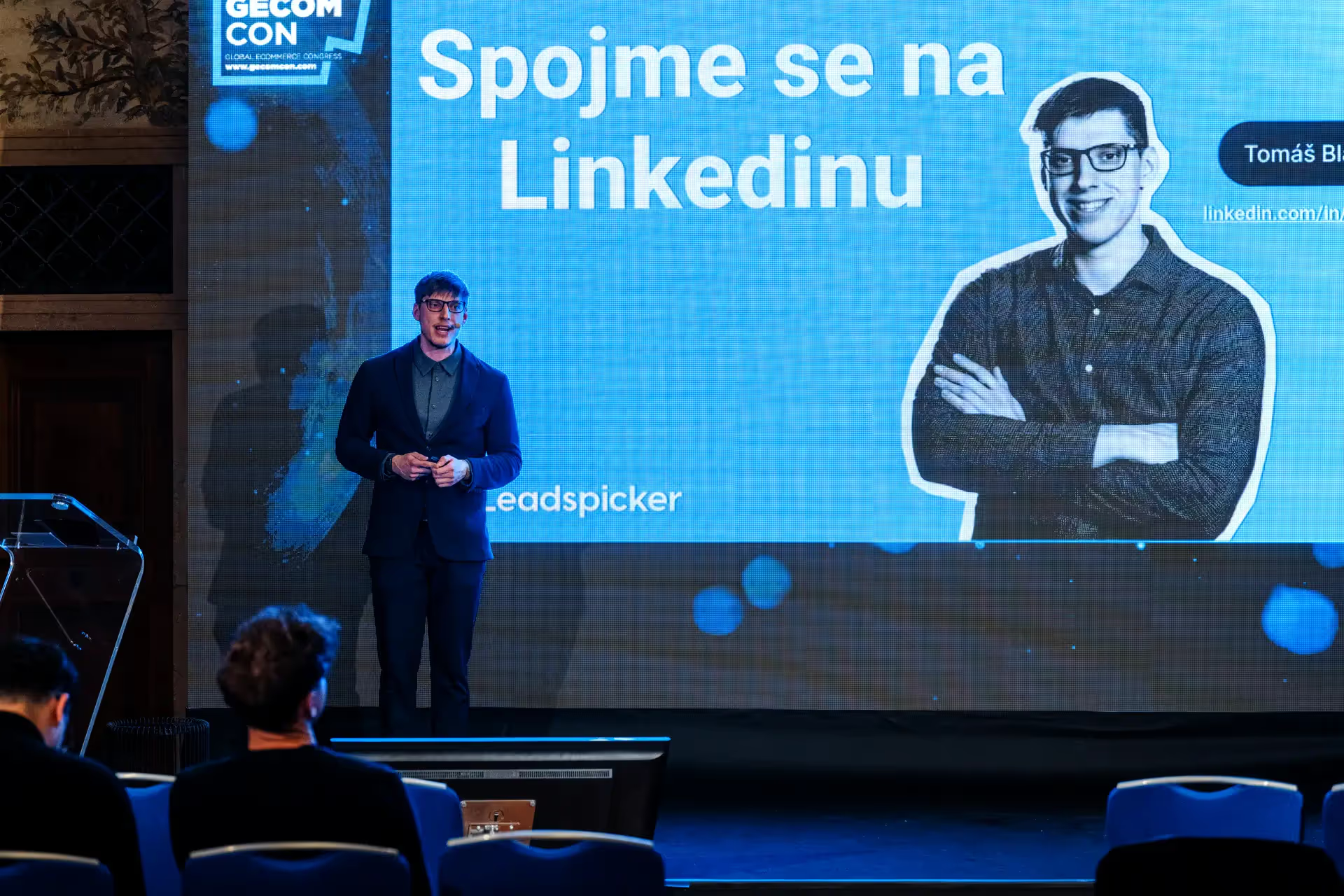
Our adventure in San Francisco
Your team closes deals. AI Agents handle the rest - finding the right prospects, enriching their data, running multichannel outreach, and routing inbound leads in minutes.

Intro
We set off for San Francisco three weeks ago with a clear goal: to understand how people here think about GTM and business in general.
Note: GTM, or Go-To-Market strategy, includes the plan for how a company brings its product to market, defines target customers, pricing strategy, distribution channels, and marketing approach.
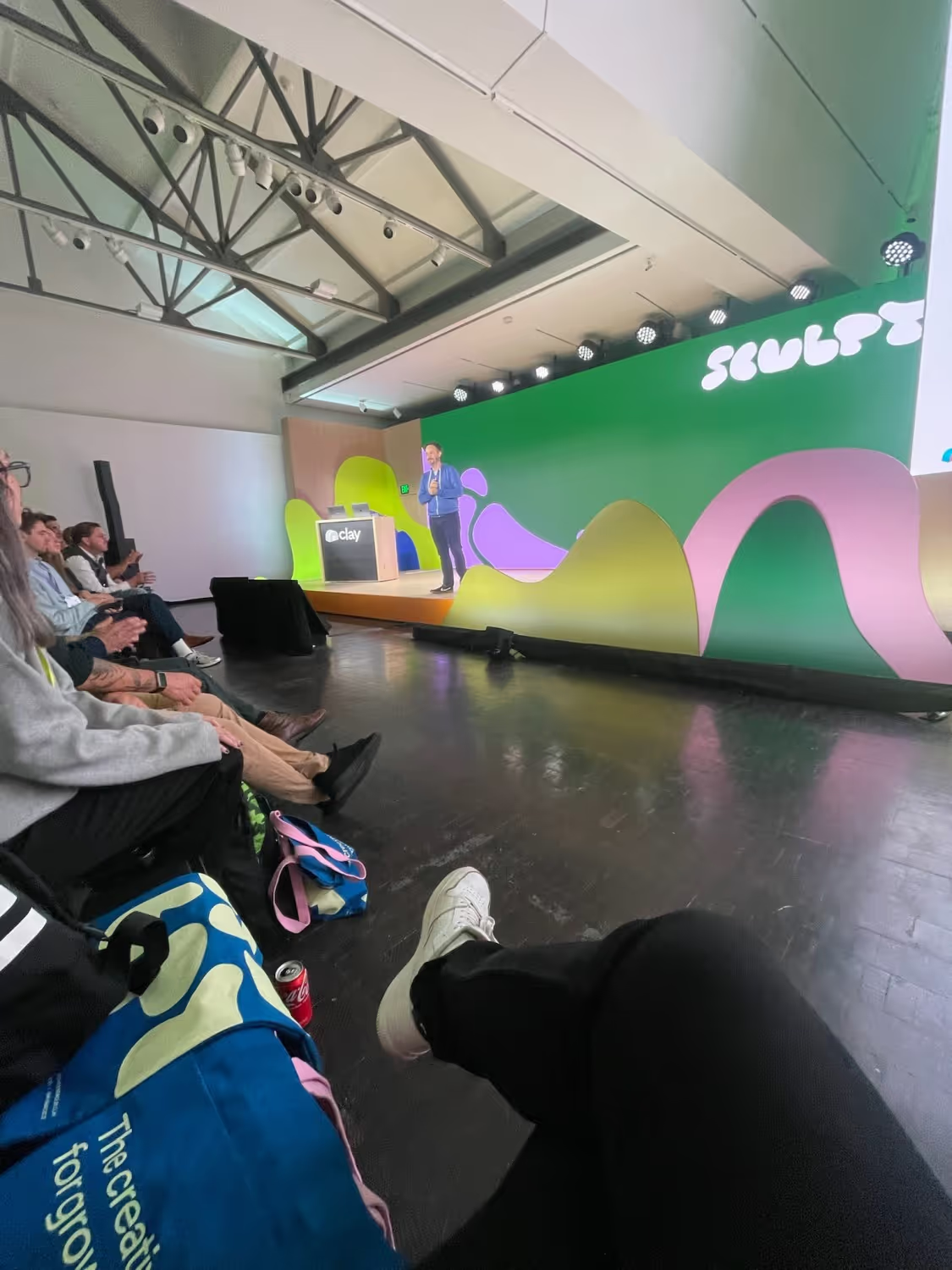
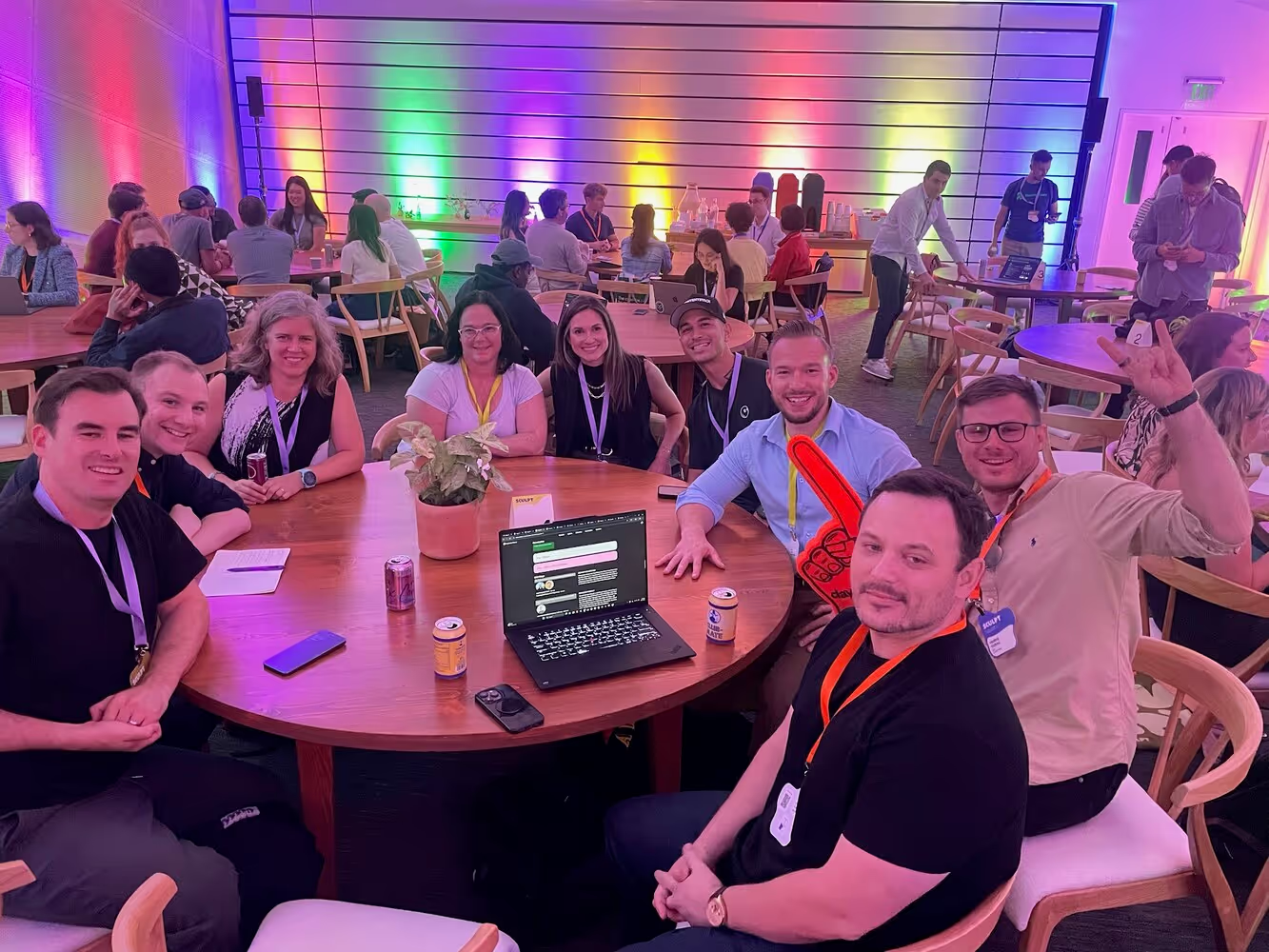
We couldn’t have picked a better time. Just a week after we arrived, a massive GTM conference organized by Clay took place, along with a whole series of GTM community events around it.
During our stay in San Francisco, many more interesting events are still ahead of us. We’re planning to attend Apollo’s GTM conference, and on October 11 we’re hosting our own event in collaboration with N8N, Apify, and Avanai. Our whole journey will culminate in mid-October at Salesforce’s major event, the legendary Dreamforce.
Culture shock? Not exactly
After arriving in San Francisco, I expected a culture shock. Compared to the Czech Republic and Europe in general, people here are much more open and friendly. It took me a few days to adjust to this approach, but soon I got into the local rhythm. You could tell that Vlasta had been to SF before.
AI is everywhere. Literally everywhere. Sitting in a park? Someone next to you is discussing neural network optimization. Riding public transport? Billboards are shouting about the latest AI agents. While in Europe you see ads for food and streaming platforms, everything here revolves around the AI ecosystem. And if not AI, then ads for M&A lawyers.
Note: M&A = Mergers & Acquisitions, a legal field specializing in company mergers and takeovers.
It’s also completely normal to start chatting with someone at the gym or elsewhere and find out they work at Google, Microsoft, or are a startup founder.
A funny paradox is that Prague is a very common icebreaker. About 70% of people we met had either been to Prague or were planning to visit.
Small tip: when someone asks where you’re from, say Prague instead of the Czech Republic. Not many people can place the country, but Prague is widely known.

Business is not like in Europe
Business works differently here compared to Europe. People push each other constantly, so networking is essential, and then consistently showing up in relevant groups matters a lot.
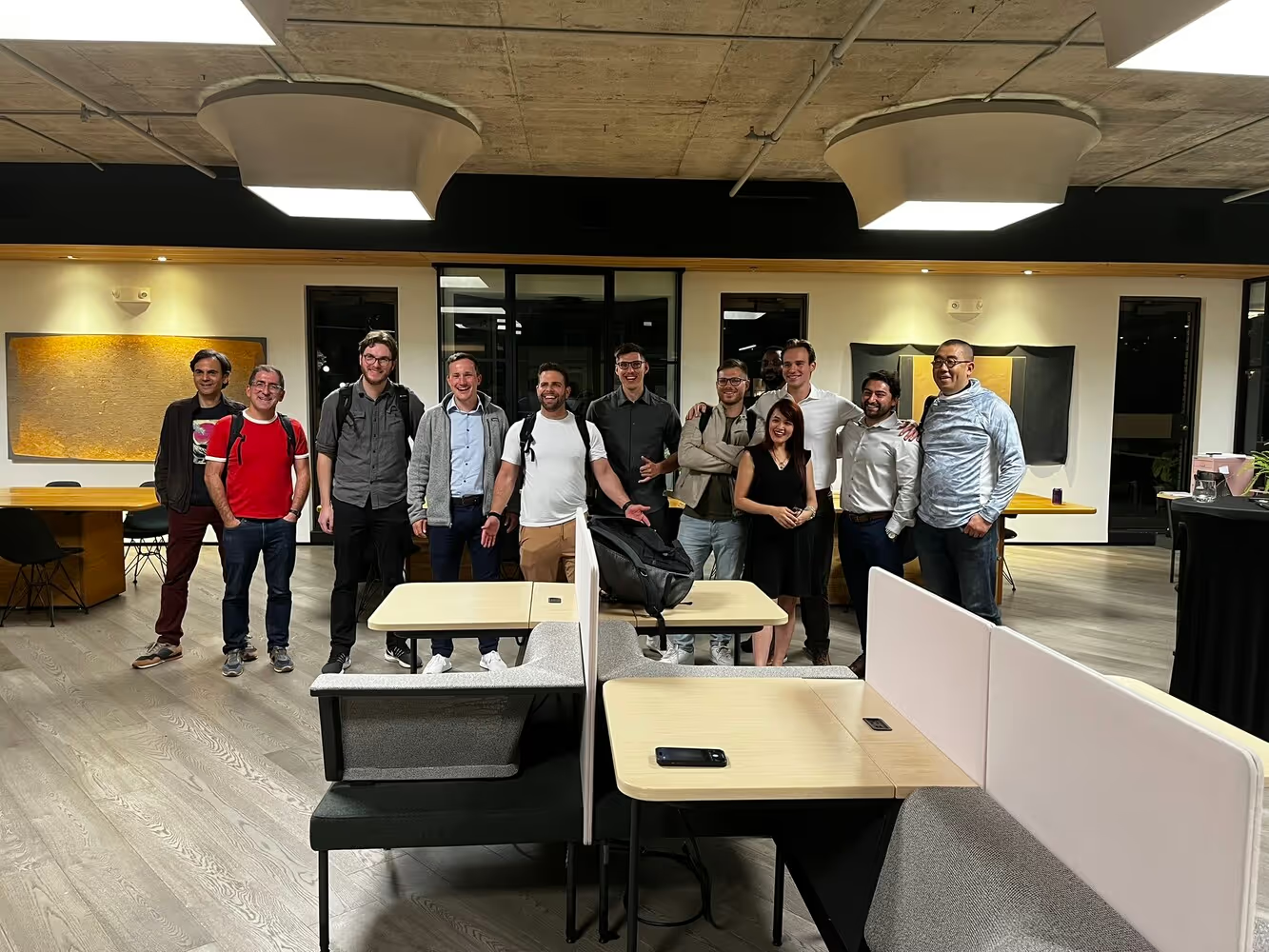
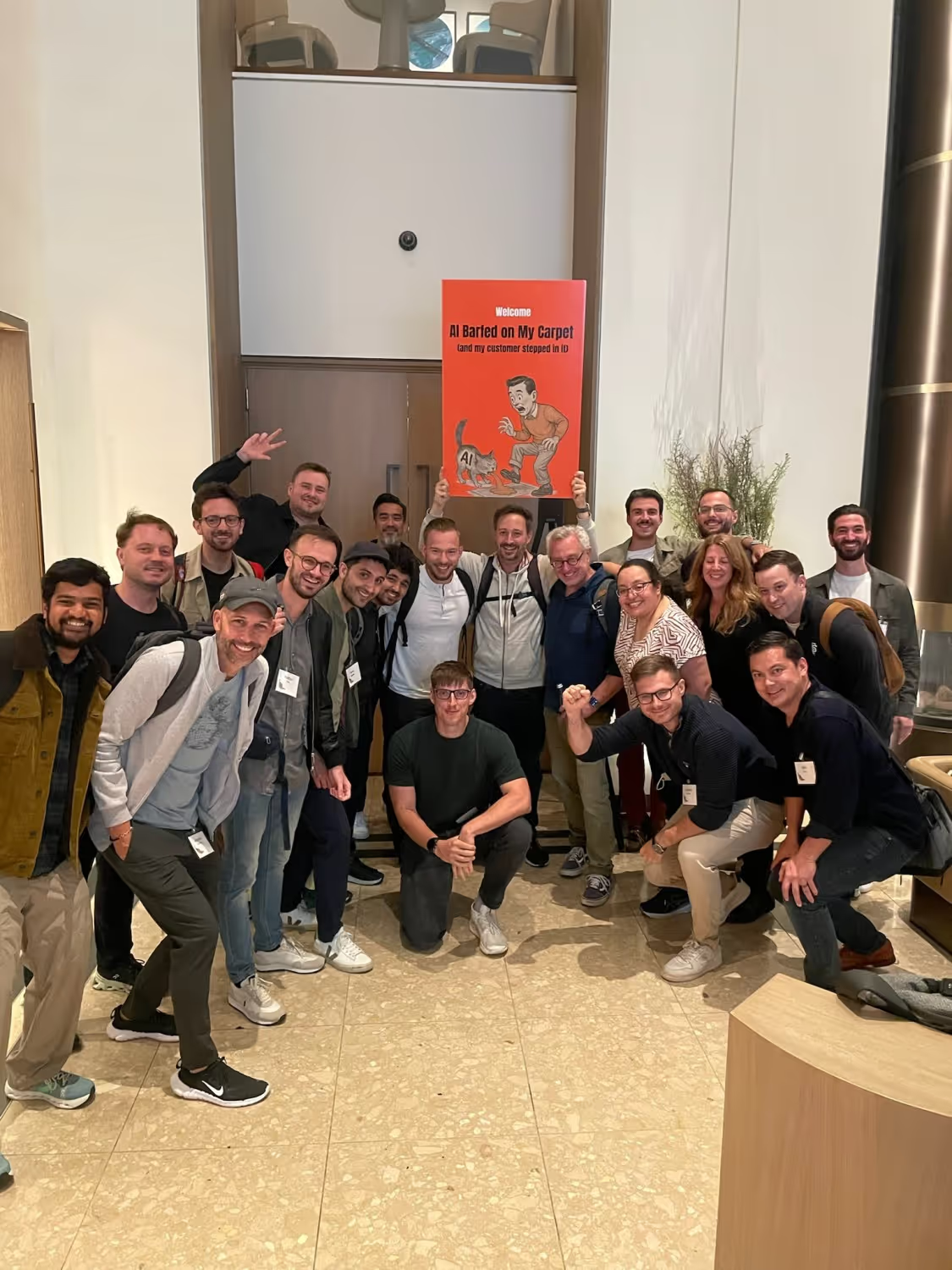
We’ve already attended several networking events. In the first weeks, we managed 2 to 3 per day. Now it often happens that we arrive somewhere and already know people, who then introduce us to others, and gradually the network grows.
One key thing: if you agree on something with someone at a networking event, follow up no later than the next morning. Otherwise, they may forget about you or push it out of their priorities.
Important lesson: I probably lost around 8 demo calls for Leadspicker in the first week because I didn’t follow up in time. Don’t underestimate follow-ups.
How to tell someone isn’t listening
In Europe: few people say “great” or “amazing.”
In SF: everything is “amazing” and “awesome.”
🚩 Red flag: if someone just nods and says everything is great, you’ve lost them.
People who are genuinely interested will start asking direct questions about how things work or challenge you. That’s when you know you’ve caught their attention.
Presenting yourself
When introducing yourself, don’t be needy. I almost never started by explaining what we do.
In our case, Leadspicker is a multifunctional product, like a Swiss army knife. If I tried to present it broadly, I’d just bore people.
Instead, I let the other person explain what they do, then asked a few challenging questions, and only then introduced a very specific use case of Leadspicker. It’s all about energy. Ideally, the energy should be balanced. As a startup from CEE, your starting position is often weaker.
Recommendation: read Pitch Anything by Oren Klaff, or at least listen to a summary on Spotify. It explains this very well. Just don’t try it on your partner at home, it might backfire.
GTM – the main reason for our trip
Now the part we came here for. GTM is considered the most important discipline for any company here, with a much larger and more aggressive competitive environment.
So far, we’ve talked to around 200 people about GTM. Almost all of them deal with a wide range of signals they track, and many try to scrape even nearly unscratchable data sources to improve targeting.
Funny story: we came across a company that built the most comprehensive and up-to-date database of local businesses in the world. Why? To gain an edge over competitors. Just for internal lead generation.
How GTM is done at scale
GTM here looks like people are running headfirst into a wall and trying to break through at any cost. They rarely rely on a single hypothesis. Instead, they test multiple hypotheses simultaneously.
Everything is done at scale. To evaluate what works, they usually test on samples of 1,000 to 5,000 contacts. Each hypothesis involves different messages, different signals, and more.
Compare that to Europe, where many companies send 100 cold emails and 20 LinkedIn messages that look like marketing newsletters, then conclude that outbound doesn’t work.
Outsourcing GTM services
One interesting observation: many companies handle GTM internally only at the vision level, while execution is outsourced to agencies.
The reason is simple. Setting up GTM properly requires a very specific skill set. You need to be part developer, at least understanding that JSON is not a person but a data format, and how APIs work. At the same time, you need strong business and sales experience. These people are rare unicorns.
Note: JSON = JavaScript Object Notation, a format for structured data exchange
API = Application Programming Interface, a way for software systems to communicate
Our observations and recommendations
We’re still discovering new approaches every day. Our phones are already full of notes from everything we’ve learned, but more on that in another post.
Final thought: if you’re trying outbound or any GTM strategy, be patient and test multiple hypotheses. Don’t give up after the first failure.
Some succeed with signals and follow-up calls, others with cold emails due to a very specific TAM, some only via LinkedIn, and others need a mix of everything plus lots of content.
Note: TAM = Total Addressable Market
The biggest paradox is that once you finally find what works, it may stop working within a few months because competitors copy it. That’s part of the game.

.svg)