Prospecting with hiring signals
A job posting is a company publishing its problem. If the role it is hiring for is the problem you solve, you have both a trigger and an opener.
When to use it
Your product substitutes for, supports or supplies a role companies hire. A company advertising three field technicians needs scheduling software; one hiring its first SDR needs outbound tooling; one hiring a data engineer has a data problem it has just admitted to.
Build it
- Decide which roles count
Write the list of job titles that imply your problem, and the ones that look similar but do not. Precision here decides everything downstream.
- Switch on the signal
Add a signal or job-portal routine to a list: the roles, the countries, and the portals worth reading. It runs on a schedule and adds each hiring company with up to three people to contact: the person the ad names, the head of the hiring department, and the titles you specify.
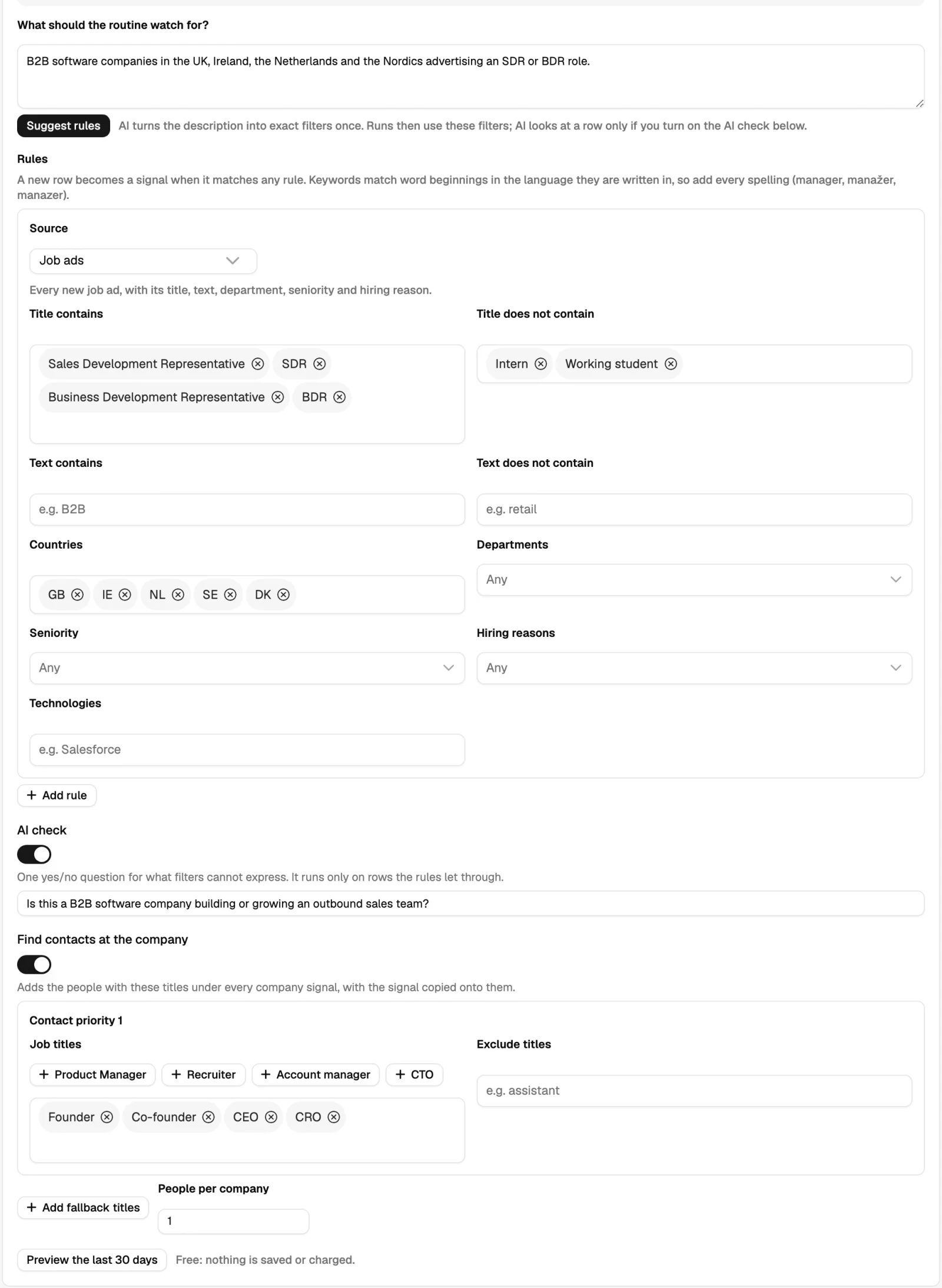
- Let it fill the list
Give it a week before judging it. Then read the companies, not the count: if a third of them are wrong, the role list needs tightening, not the message.
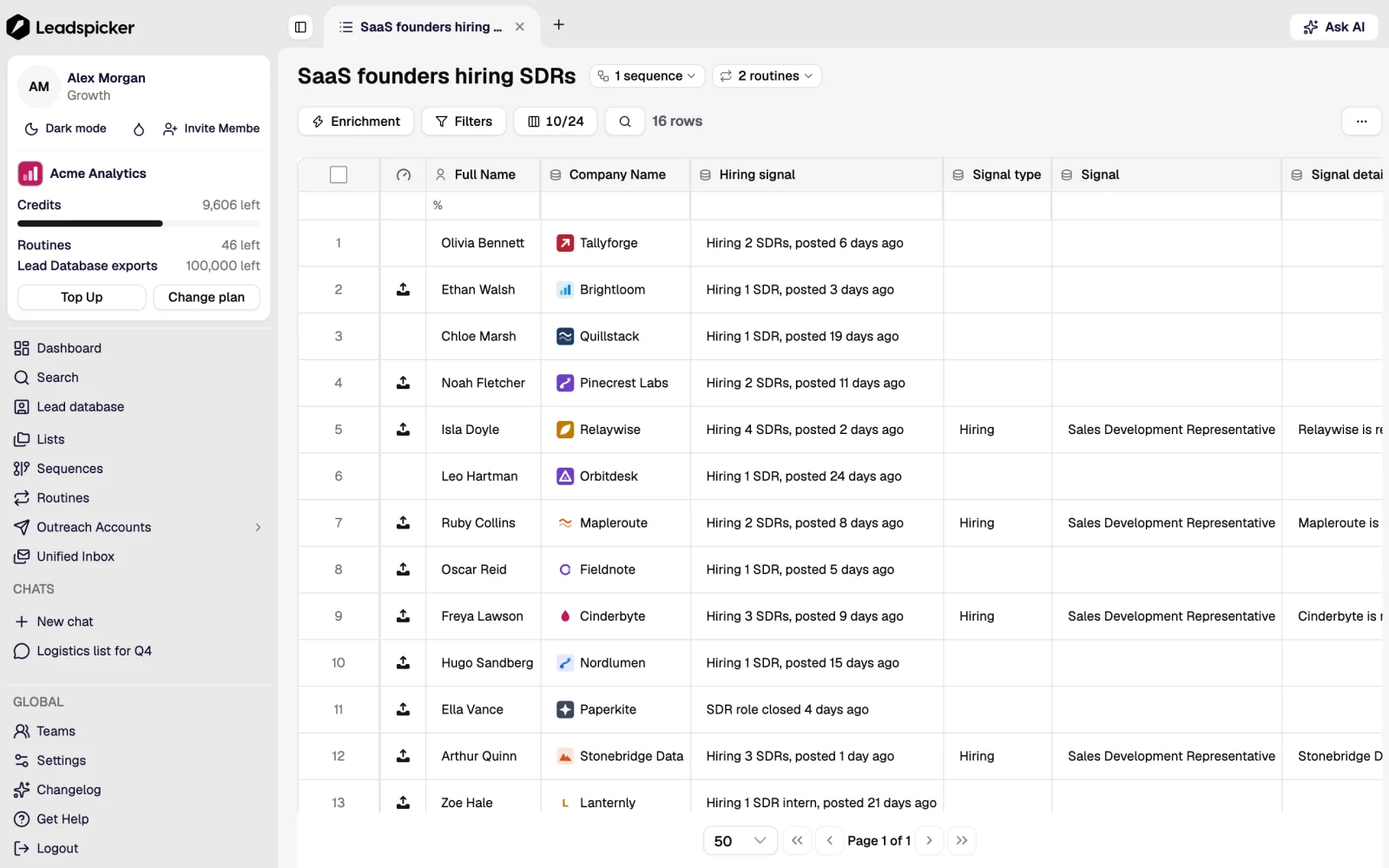
- Enrich and verify the trigger
Add email enrichment, and an AI column that reads the ad and answers in one sentence why this company is a fit. That sentence is the opener.
- Write a short, timely sequence
Two or three steps. The first names the ad, what it implies, and one sentence on what you do about it. Speed matters more than polish: the ad is only fresh for a couple of weeks.
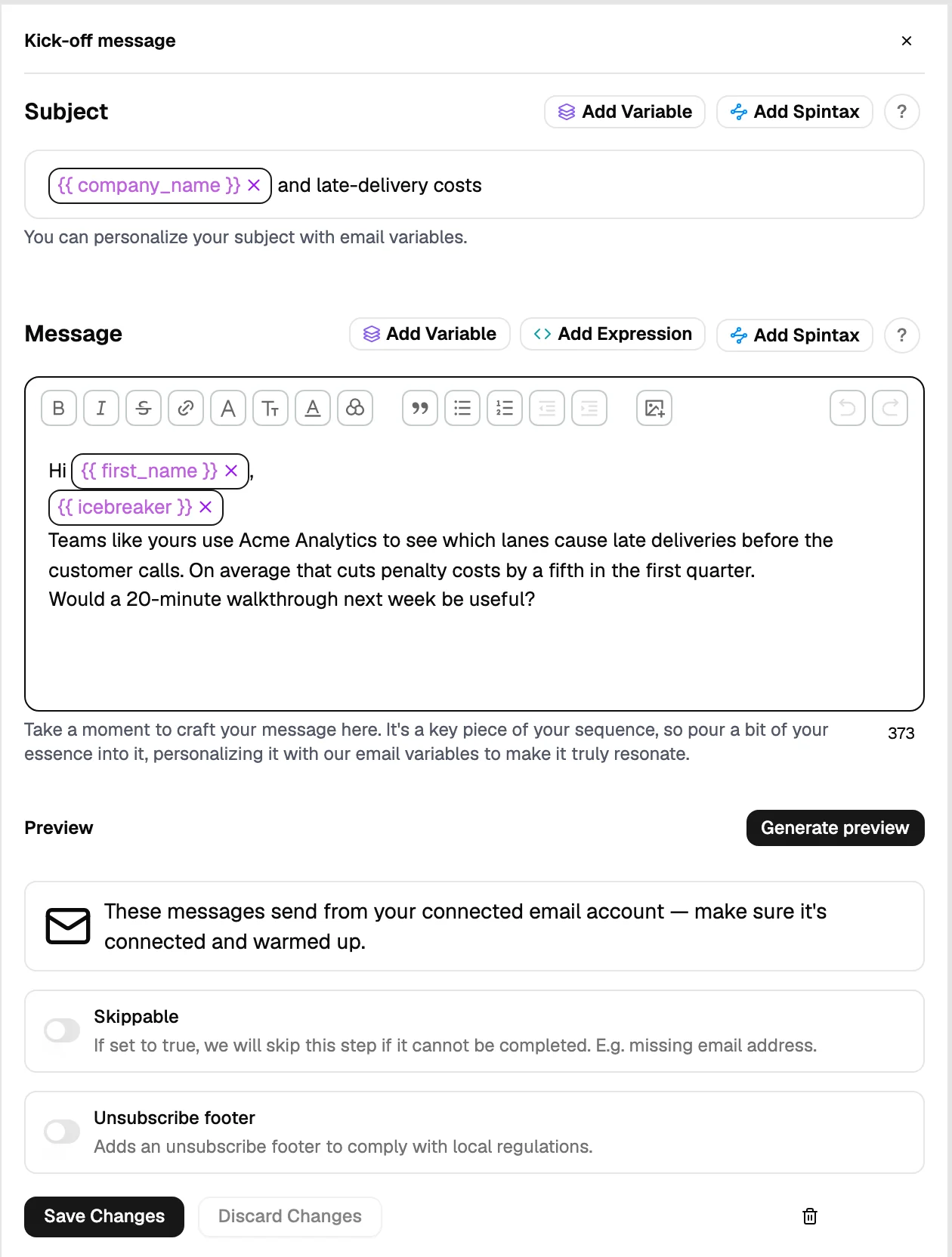
- Connect and run continuously
The routine keeps adding companies and the sequence keeps picking them up, so the play runs without a weekly rebuild.
Variations worth knowing
- Hiring freezes and layoffs: the inverse signal, for products that cut cost rather than add capacity.
- Leadership changes: a new executive buys differently in their first ninety days than their predecessor did in year four.
- Technology changes: a company that just adopted a platform you integrate with has a reason to hear from you.
- Funding: new money means new budget, though it also means a crowded inbox, so the opener has to earn its place.
What good looks like
Messages that arrive the week the ad goes up, openers that quote the ad, and replies from people who can see why you wrote now.
Red Button reports a 30–45% response rate on multichannel outreach using signal-based targeting. Read the Red Button case study.
Was this page helpful?
Still stuck? Email support@leadspicker.com or use the chat in the app.
Last updated 2026-11-12